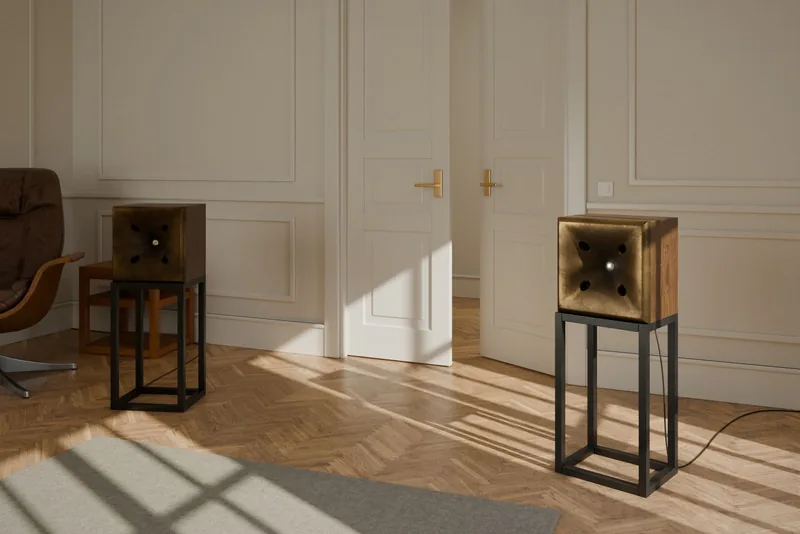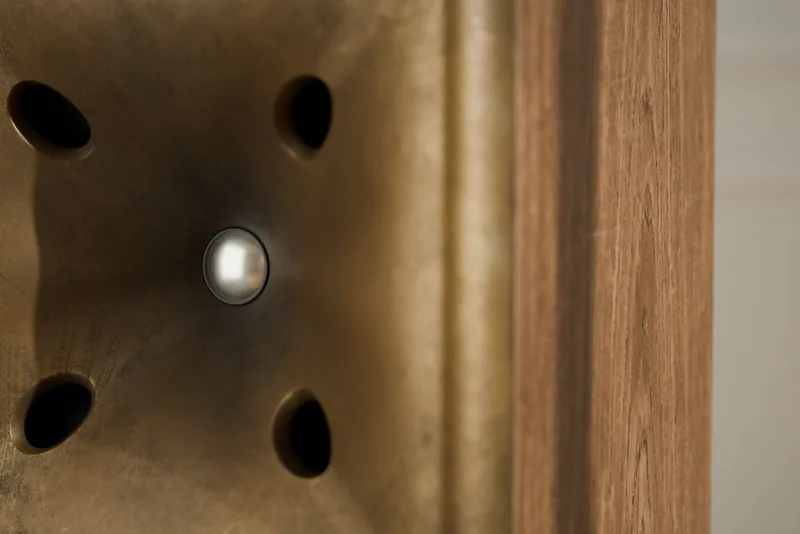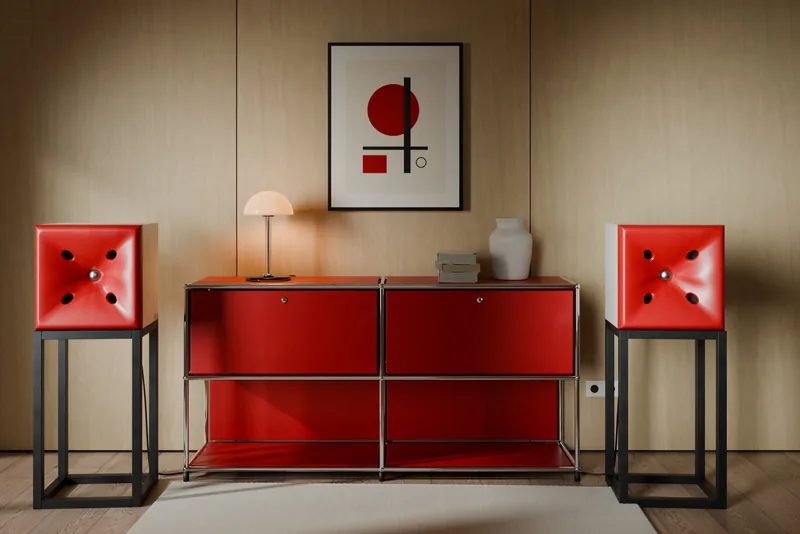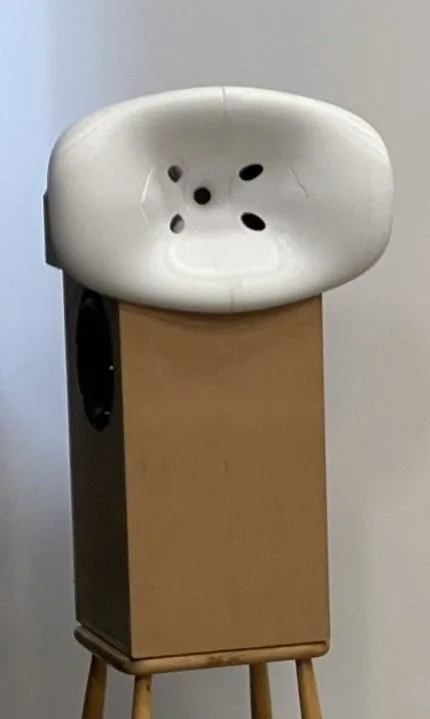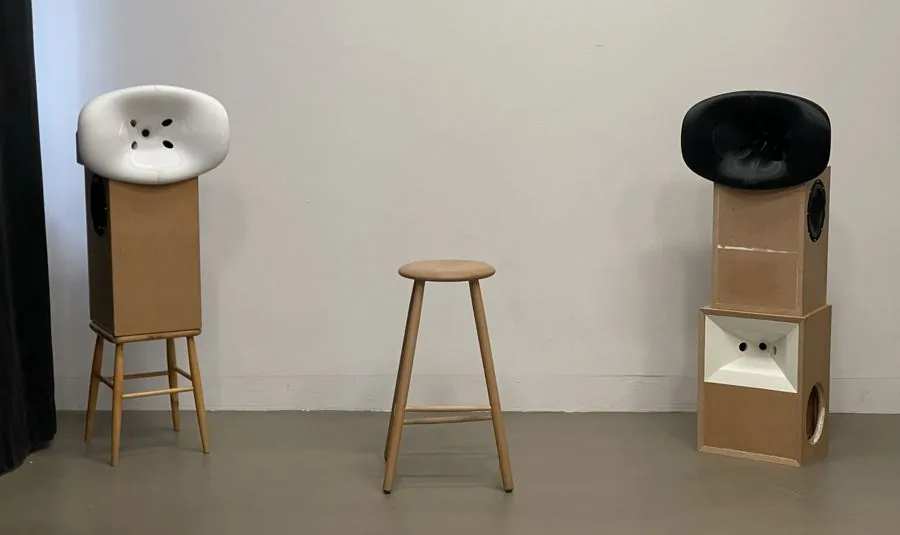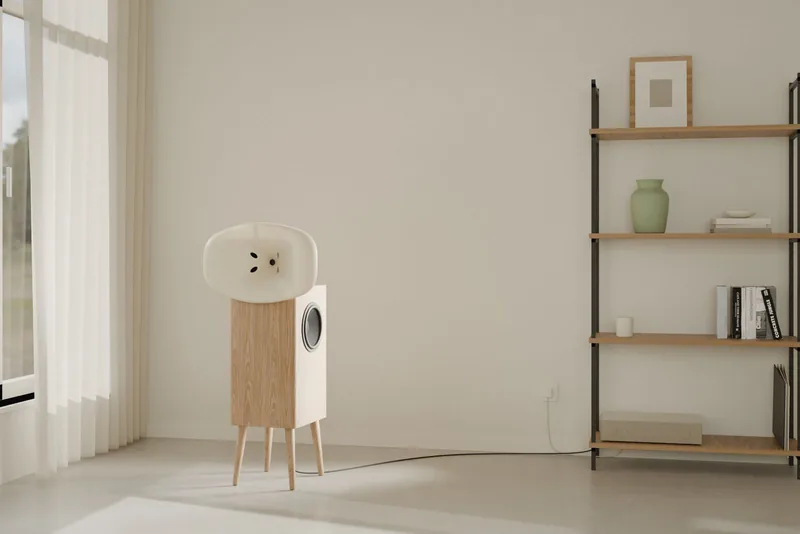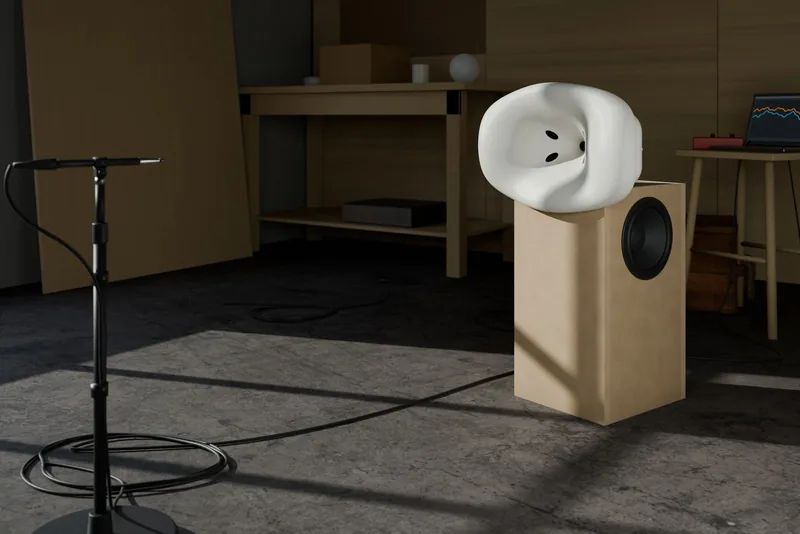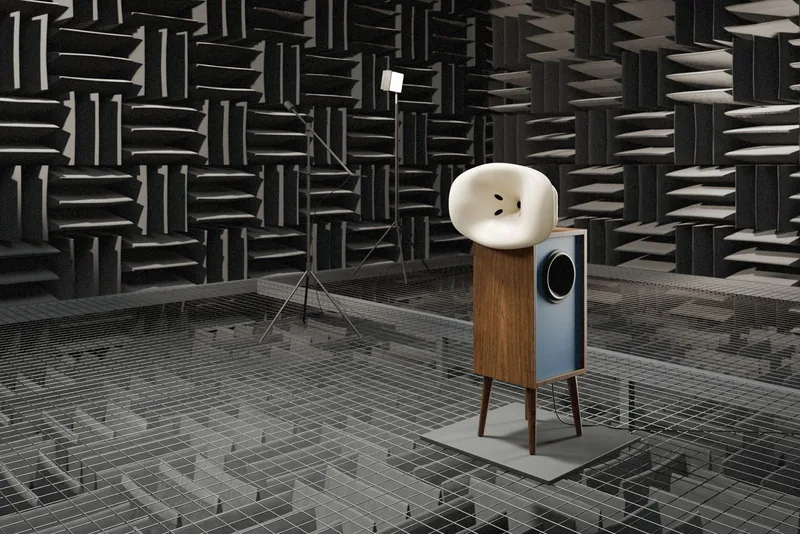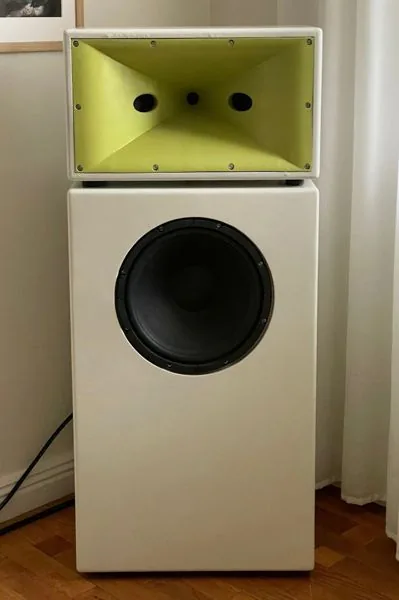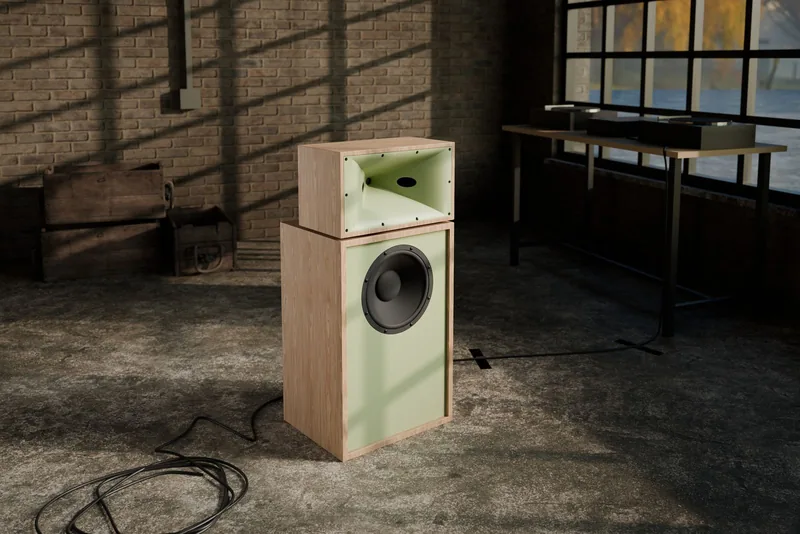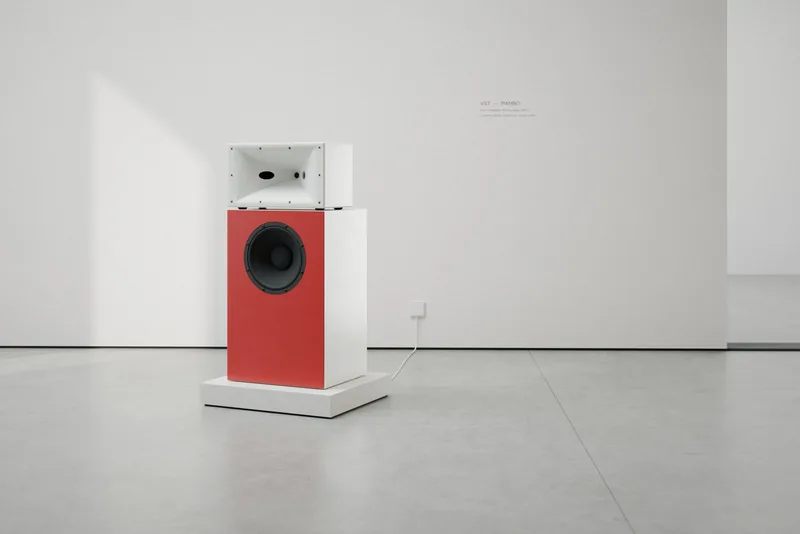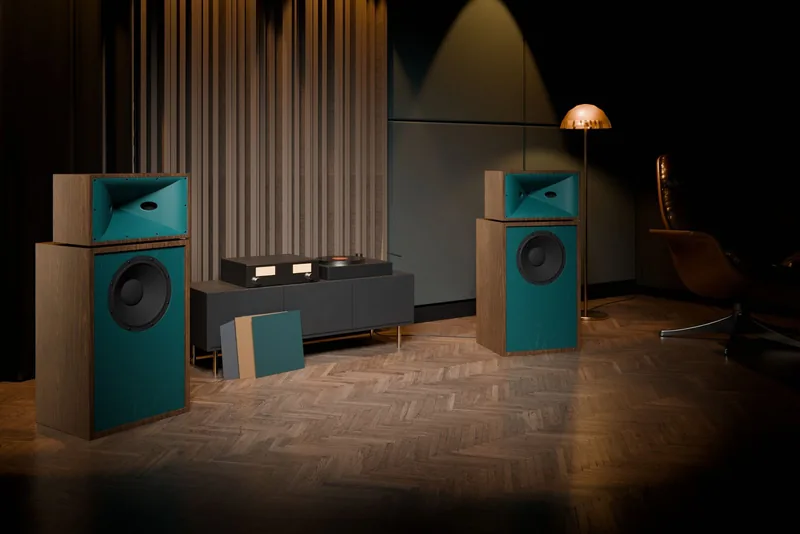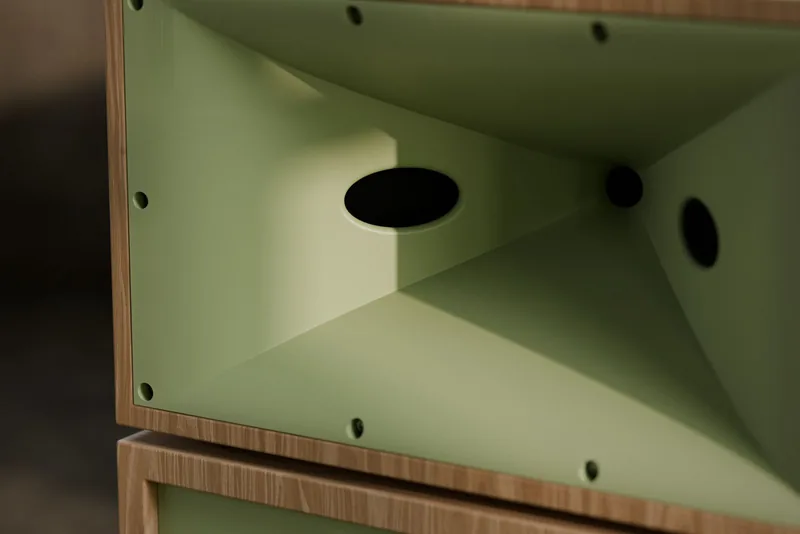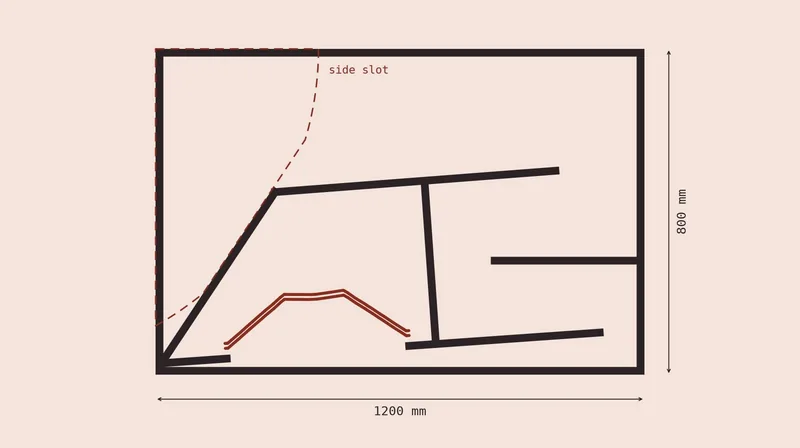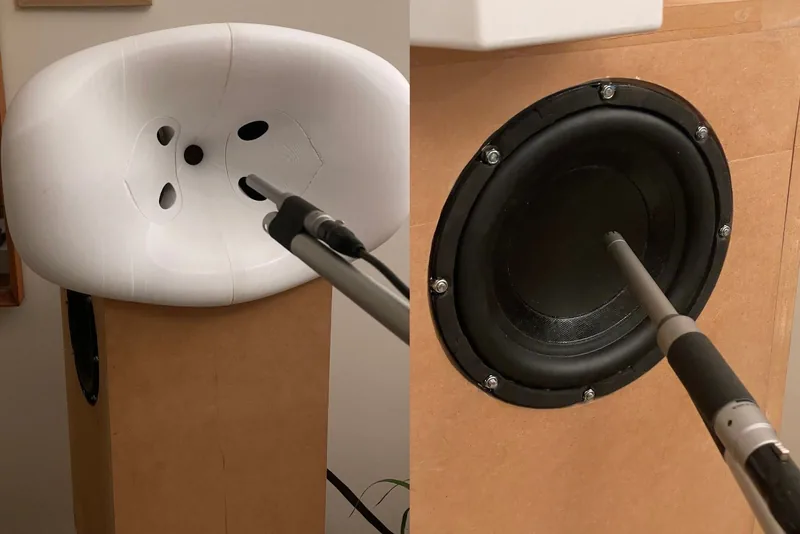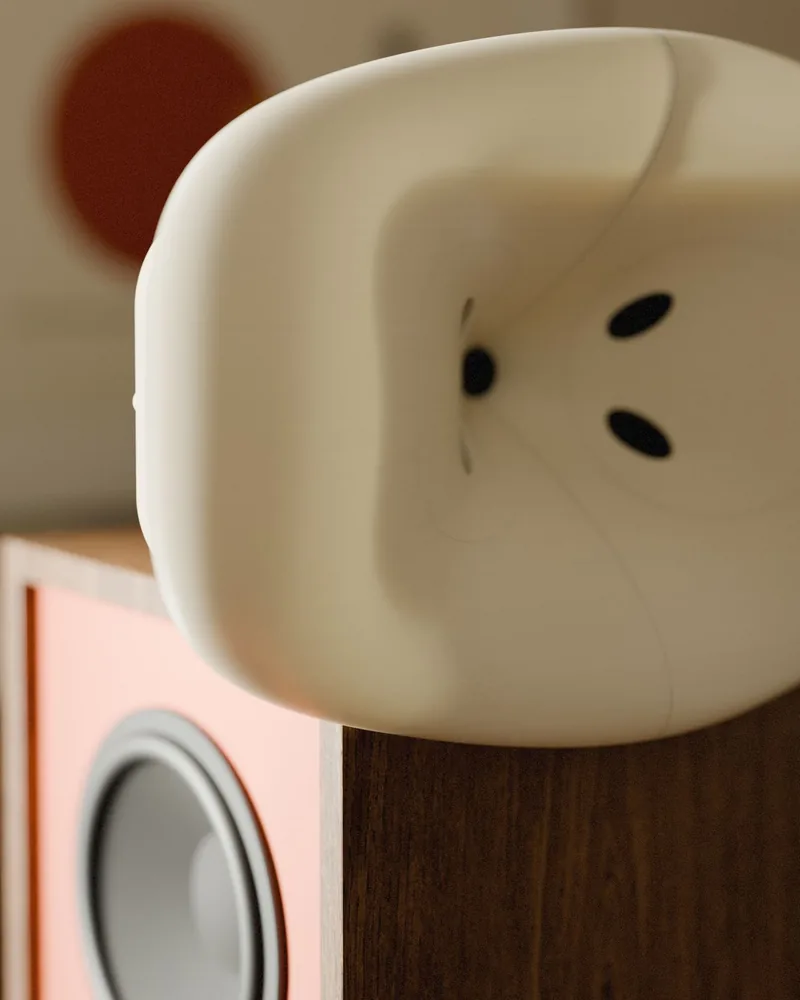
A multiple-entry horn, often shortened to MEH, is a horn loudspeaker in which several drivers share one horn. Each driver enters the horn at its own point along the wall, and together they sound as one source.
How it works
The driver for the highest frequencies, a tweeter or a compression driver, sits in the throat: the narrow end of the horn. The midrange drivers sit behind the horn and fire into it through small ports in its wall, a little further out.
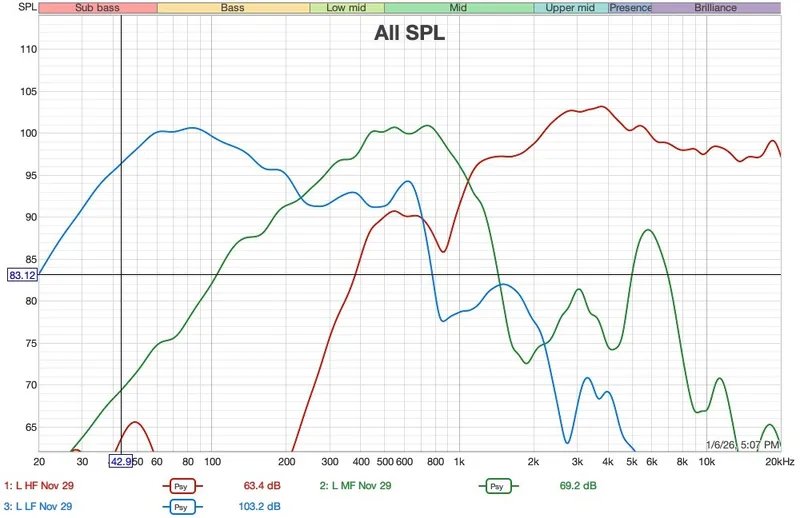
The ports are placed close to the throat: about a quarter of a wavelength of the highest frequency the midranges play, or closer. At that distance the sound from the ports and from the throat adds up as if it came from one point. In Kantarellen, for example, the ports sit 85.7 mm from the centre of the throat, and the midranges hand over at 1 kHz, where a quarter wavelength is about 86 mm.
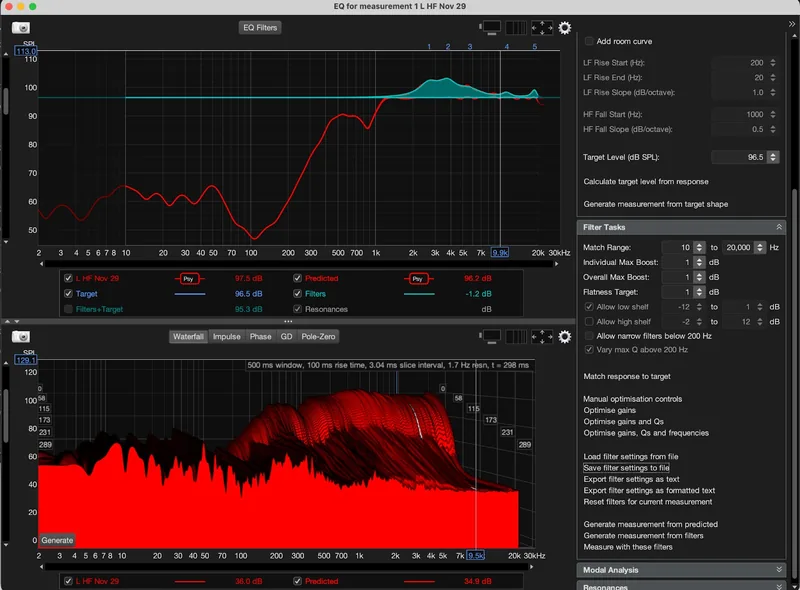
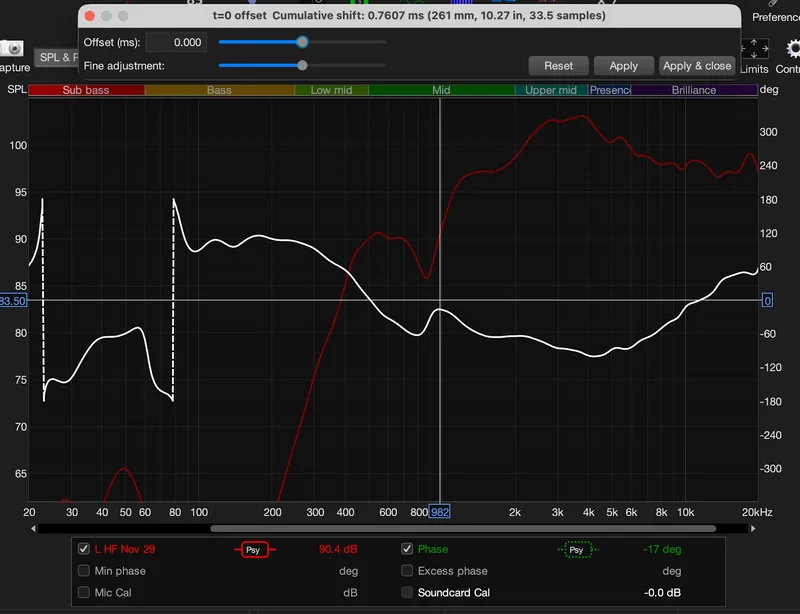
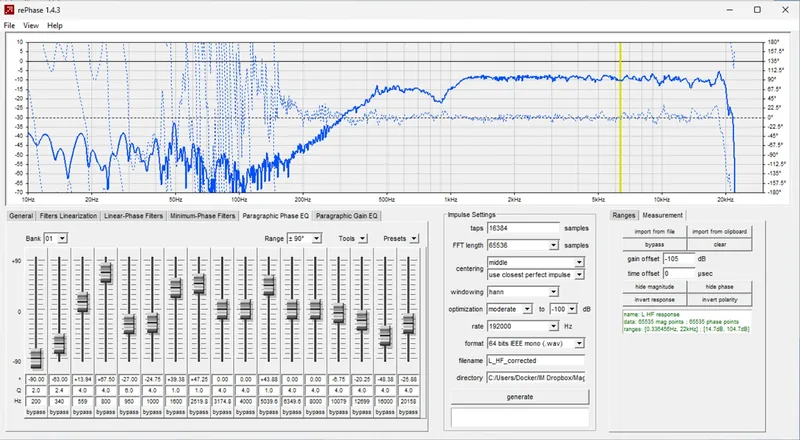
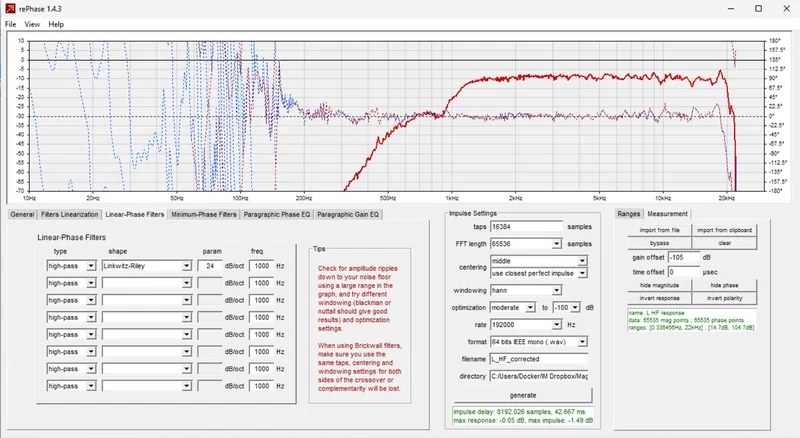
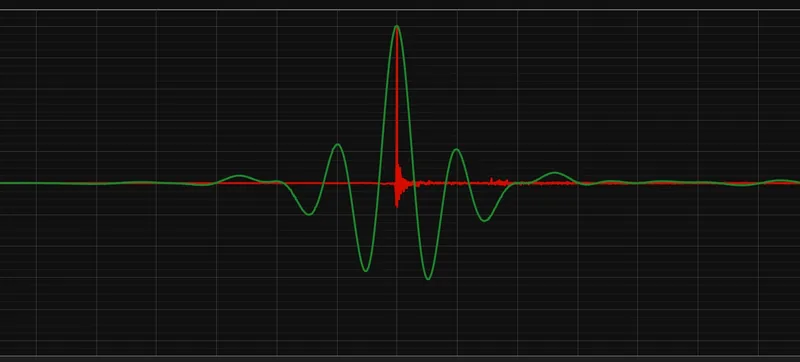
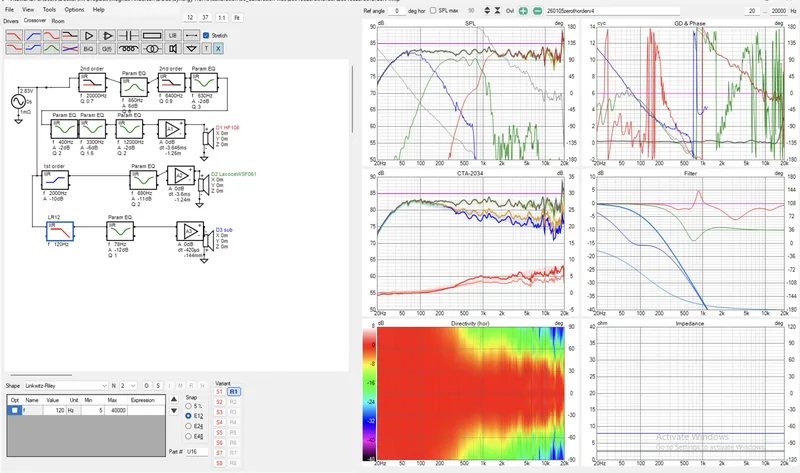
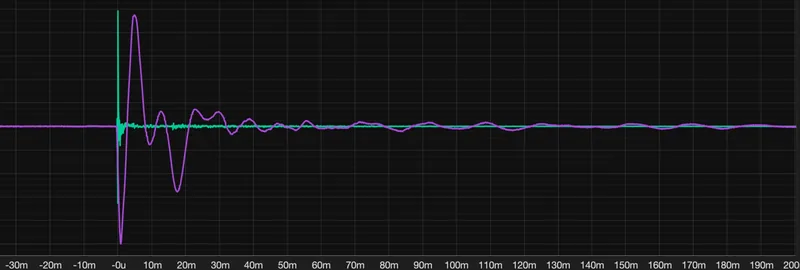
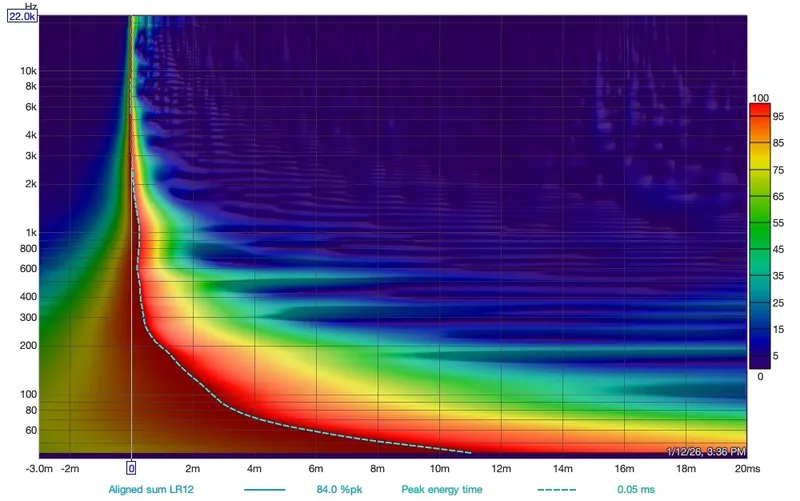
The ports and the small chamber behind each midrange also act as an acoustic filter that rolls off the midranges' treble. A digital crossover and a short delay do the rest, so the drivers hand over smoothly in level and in time. Two guides show how: a linear-phase , and a that uses the horn's own slopes instead of crossover filters.
Why build one
In a conventional speaker, the tweeter and the midrange sit a hand's width apart. Around the crossover frequency their sound reaches the listener from two places, and the coverage narrows and widens with angle. A multiple-entry horn keeps every driver inside one horn, so the speaker behaves as a single point source at every frequency it plays.
The horn then controls the directivity: the sound spreads evenly over a set angle, sideways and up and down, and the reflections from the room are close in tone to the direct sound. That is what makes the sound clear and the stereo image stable across a wide listening area.
A horn also gives a lot of output from small drivers, and one horn for all the drivers keeps the speaker compact.
Related designs and names
Coaxial and concentric drivers also stack the tweeter and the midrange on one axis, but the two still start at different depths, and the woofer cone around the tweeter acts as a waveguide that moves. In a multiple-entry horn the drivers share one fixed horn surface.
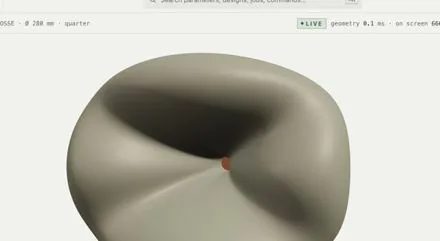
Multiple-entry horns are often mentioned together with Tom Danley's Unity and Synergy horns, which also put several drivers into one horn. Those are different designs from Danley Sound Labs, conical horns with a passive crossover. The VIST horns use smooth profiles such as OSSE and R-OSSE, found by simulation, with a digital crossover.
Designing one
A multiple-entry horn is harder to get right than a plain horn. The ports are holes in the wall the treble has to pass over, and the chambers behind the midranges have resonances of their own. Port position, size and shape all change the result.
Every VIST horn is therefore modelled in 3D and simulated with the boundary element method before anything is built, drivers included. The horn profile, the port positions and the chambers are refined until the directivity is even and the drivers hand over cleanly, then the horn is printed and measured.
VIST multiple-entry horns
- : a compact horn from 80 Hz up, with one 34 mm tweeter and four 5-inch midranges in an OSSE horn.
- : a two-way horn printed at home, with a compression driver and two 6.5-inch midranges in an R-OSSE horn.
- : a horn top for parties and large rooms, with a compression driver and two 8-inch midranges.
The horns are shaped in , free software for horn and waveguide design. For a multiple-entry horn designed for a particular room or product, see .